


E-Newsletter 7th Edition
7th September 2026
Subject: Pioneers Panel invite, ABS Census update, New team members + More
In this edition, we're inviting you to a member-only webinar celebrating the pioneers of peer work, following up on the initiative we supported about the ABS Census with an update and new actions, welcoming five new staff members to the AAPW, sharing a sector survey on LGBTIQA+ mental health support, and requesting peer worker contributions for Mental Health Month this October. Read on for all the details.
Pioneers of Peer Work in Australia: Members’ only Webinar
Peer work in Australia has a long and proud history. It has pioneers, and this Mental Health Month, you can hear from them directly. Join us as we bring together five of the peer workers who have been instrumental in leading the growth and development of the lived experience and peer work movements in Australia over the past three decades.
Come along to celebrate, learn about the history and the movement behind our discipline, and hear directly from people who helped shape and grow it. Our panellists will talk about their work in pioneering the evolution of peer work in Australia, share what brings them joy in peer work, and offer their insights and advice for the future direction of peer work in Australia. The session will include a live Q&A, providing a genuine opportunity to ask questions of the peer work leaders who laid the foundations for us.
Meet the Pioneer Panel:
Tim Heffernan
Tim is an experienced Consumer Peer Worker and current chair of Being. He is a former Lived Experience Deputy Commissioner at the Mental Health Commission of NSW. Tim worked for over ten years as a Peer Worker and is a founding member of the Illawarra Shoalhaven Suicide Prevention Collaborative.
Fay Jackson
Fay is a trailblazing lived-experience leader who was one of the original eight Peer Workers and Consumer Consultants in Australia, later becoming the inaugural Lived Experience Deputy Commissioner of the NSW Mental Health Commission and Founder of Vision In Mind.
Leilani Darwin
Leilani is a proud Quandamooka woman, nationally recognised for her groundbreaking contributions to suicide prevention, mental health reform and culturally informed systems change. With decades of experience, Leilani brings unmatched expertise in First Nations-led policy development, program design, and lived experience leadership.
Trish Tran
Trish was in Western Australia's first cohort of public mental health clinic peer workers, and among the first trained and first trainers in Alternatives to Suicide at Curtin University. She co-developed WA's first Peer Supervision course and was WA's first Assistant Commissioner, Lived Experience (Consumer). She has been with DISCHARGED since its inception, providing WA's first peer-led suicide harm reduction groups.
Annette Mercuri
Annette is a carer lived-experience leader with more than 17 years’ experience as a carer consultant within the Victorian Clinical Mental Health System.
You can find more detail about our panellists’ experience and leadership in the member portal event description.
When: Wednesday 7 October, 5:00 to 6:30pm (AEDT) Where: Online Who: AAPW 'full' and 'student' members only
Cost: Free!
Log in to the member portal and register here: https://www.aapw.org.au/pioneers-of-peer-work-in-australia-aapw
This event is for 'full' and 'student' members only. If you haven't already, become a member here: https://www.aapw.org.au/become-a-member
ABS Census Initiative update and further actions
Back in August, we asked the AAPW community to take action during the 2026 Census, adding 'Lived Exp' before your job title, if lived experience is an essential part of your role. The National Census is only held by the Australian Bureau of Statistics (ABS) once every five years, and Peer Work has not been recognised as a distinct occupation in the ABS's occupation classification, called the Occupation Standard Classification for Australia (OSCA). This initiative, developed and advanced by the WA National Policy Consumer Advisory Group (CAG), was about creating the data needed to drive accountability and strengthen peer work across Australia.
Here's the update: the ABS has released a draft update to OSCA that, for the first time, names 'Lived Experience Mental Health Peer Worker' as a specialisation.
Access the full consultation draft (OSCA) here
While we’re thrilled peer work is being officially recognised by the ABS, we have some concerns about the way in which it is being represented. The draft occupational classification lists peer work under the general code 441333 Mental Health Worker and the only the only deference to our distinct skill set is:
"May use lived experience to provide peer coaching and support to individuals or groups through intentional sharing, active listening and reflective practice."
Why this matters, and what's still missing
This is a meaningful first step, and a direct result of the sustained advocacy of the WA CAG, and peer workers who took action during the Census last month. Thank you to everyone who recorded lived experience in their job title. Unfortunately, we don't believe the current draft accurately reflects peer work and have identified some key issues:
Misclassification of peer work. Lived Experience Mental Health Peer Worker has been proposed as a specialisation of the general 441333 Mental Health Worker occupation. We do not believe peer work should be classified as a specialisation of Mental Health Worker. Peer Work should be recognised, as a distinct occupation, in its own right.
Peer work is grounded in lived and living experience as a core professional capability and centres on mutuality, reciprocity, hope, self-determination, human rights and advocacy. It has its own history, values, principles, knowledge base and practice approaches, which are not adequately captured within the broad Mental Health Worker occupation.
The diversity and breadth of peer work are not adequately represented. Peer Work should be understood through several intersecting dimensions:
-
Field of work: the sector or context in which peer work is practised, such as mental health, suicide prevention, alcohol and other drugs, homelessness, disability and justice.
-
Peer work stream: the lived experience and movement foundations informing the work, including consumer/personal lived experience, family/carer/kin lived experience and First Nations peer work.
-
Role type: the primary function of the role, such as frontline peer support, leadership, management, supervision, education, advocacy, policy, research and workforce development.
The draft does not distinguish between these dimensions and appears to conceptualise peer work primarily as frontline support delivered within mental health services. This excludes significant parts of the peer workforce, including Lived Experience Leaders, Advocates, Educators, Policy Professionals and Researchers.
The consequences of getting this wrong. Without dedicated occupation codes, this workforce can't be accurately counted, which affects workforce planning, funding decisions, training pathways, and governments' ability to be held accountable for their own stated commitments to the lived experience workforce.
Public consultation is open now and closes Friday 18 September 2026. This is our best opportunity to influence the classification before its official release in March 2027.
How you can help:
- Complete the ABS feedback questionnaire via the ABS Consultation Hub
- Share this with your networks and encourage other people in lived experience roles to have their say.
[Access the questionnaire here
Questions 1 to 7 are demographic (who you are, what state you live in, and so on). Then you go onto the following two questions:
- Question 8: Which proposed changes are you commenting on?
- In this section you reference the following occupational code 441333 Mental Health Worker
- Question 9: What should be corrected or reconsidered before this change is finalised?
- This section is free text and entirely up to you, the feedback you want to give to the ABS on how they propose to classify Peer Work.
Access the ABS OSCA Feedback Guide here
Below is the AAPW’s submission, which you are welcome to draw on, if it aligns with your views:
We do not support including peer work as a specialisation within occupation code 441333 Mental Health Worker. Peer work is a distinct occupation grounded in the purposeful application of lived and living experience, with its own histories, movements, values, principles, knowledge base and practice approaches. Classifying peer workers under Mental Health Worker misrepresents peer work as a form of general mental health support and fails to recognise that lived experience roles operate across multiple fields, including mental health, suicide prevention, alcohol and other drugs, homelessness, disability and justice. It also overlooks distinct consumer/personal lived experience, family/carer/kin and First Nations peer work streams.
We are advocating for a full restructure and the creation of a new high-level Sub-Major Group for Lived Experience Workers, with separate occupational codes that recognise different role types and fields of peer work. This must encompass not only frontline peer support workers support roles, but also lived experience leadership, management, supervision, education, advocacy, policy, research and workforce development roles. Given the diversity and complexity of this workforce, we are also calling for a longer and more extensive consultation process involving peer workers, employers and peak bodies.
Welcome to five new staff in the AAPW team
We’ve finished recruiting five new staff members to the AAPW, each bringing deep lived experience and expertise in peer work!
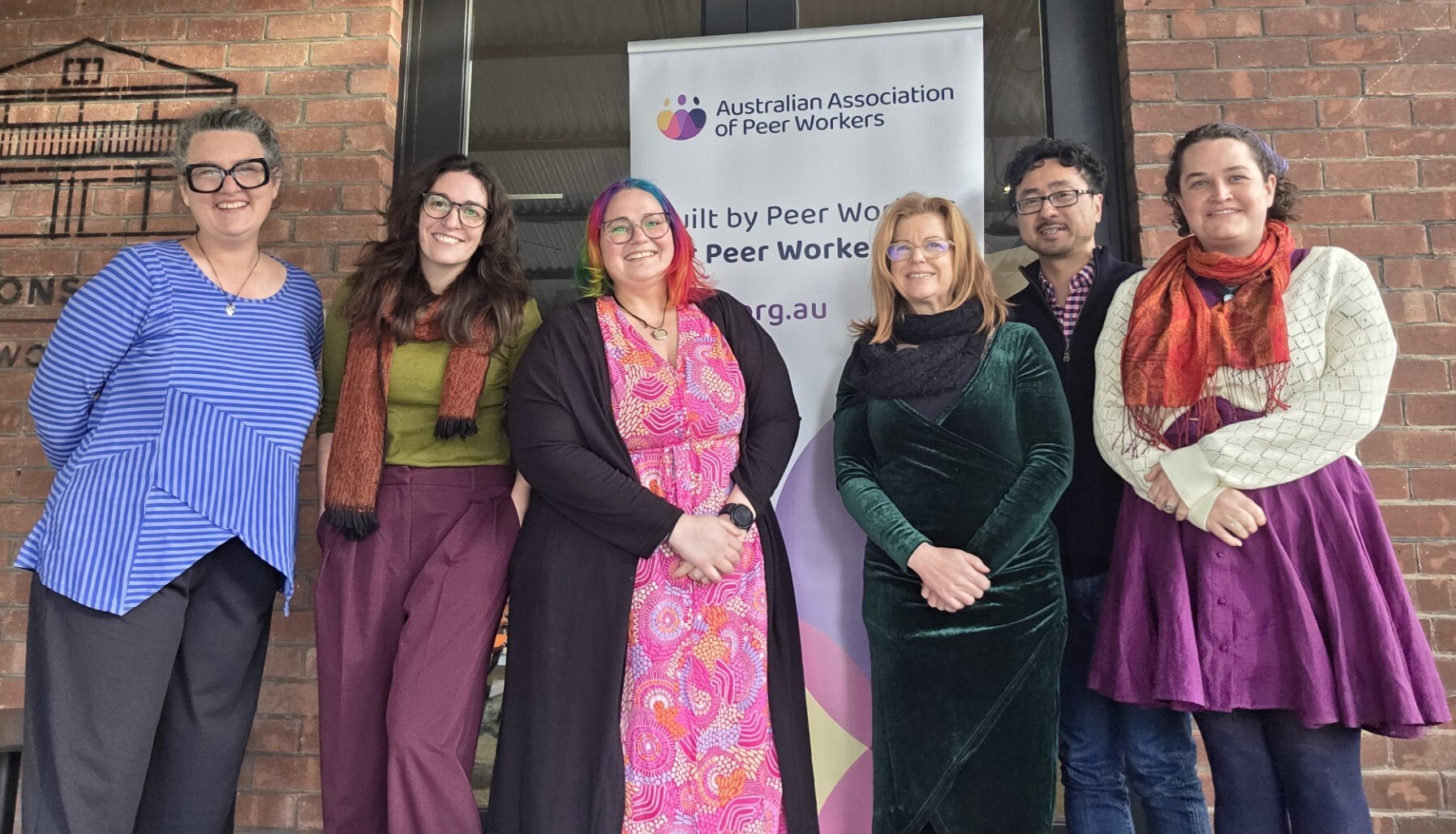
Alex Li: Workplace Standards Lead
Alex comes from a Family Carer Peer Worker background and brings experience leading systemic change through peer education and workforce development initiatives as well as a background in academic research and business development. As Workplace Standards Lead, Alex will drive initiatives that strengthen safe, sustainable, and clearly defined employment pathways for peer workers, managing the co-design of the National Workplace Safety Standards and a National Training Plan.
Lorna Downes: Practice Standards Lead
Lorna Downes is a family/carer lived experience (peer) worker with more than 20 years' experience in family/carer peer support, advocacy, workforce development, training, supervision, research and consulting within the mental health sector. As Practice Standards Lead (Family Carer), Lorna will shape nationally consistent practice frameworks and co-lead the co-design of the National Peer Work Scope of Practice, Role Definitions, and Supervision Framework.
Shiobhan Sharpe: First Nations Lead
Shiobhan Sharpe is a proud Wulgurukaba and Gunggandji woman, lived experience leader, educator and advocate working at the intersection of Aboriginal and Torres Strait Islander Social and Emotional Wellbeing, mental health reform and workforce development. As First Nations Lead, Shiobhan will lead the development of the AAPW's First Nations Peer Workforce Strategy, working in partnership with First Nations peer workers and communities to co-design culturally grounded approaches to peer workforce development.
Nadia Rivkaris: Member Services and Advocacy Lead
Nadia Rivkaris joins the AAPW as Member Services and Advocacy Lead, bringing over 15 years of diverse professional experience in design and innovation, project management, workforce development, and community consultation and engagement, including four years working in suicide prevention. She also brings to bear her personal lived experiences of suicide, mental illness, and navigating life with a body that has been shaped by trauma. As the Member Services and Advocacy Lead, Nadia will oversee member engagement and advocacy across the AAPW, bringing together insights from members and the broader peer workforce to strengthen the Association's priorities.
Saskia Ymker: Executive Manager, Workforce Strategy
Saskia (she/her) is a lived-experience leader from Aotearoa, New Zealand, with a background spanning peer work, organisational leadership, workforce development, and mental health systems change. As Executive Manager, Workforce Strategy, Saskia will lead the organisation's national workforce development programme and contribute to its strategic development and growth.
Please join us in welcoming Alex, Lorna, Shiobhan, Nadia and Saskia to the AAPW team!
LGBTIQ+ Mental Health and Suicide Prevention 2026 Sector Survey
We also wanted to draw your attention to the LGBTIQ+ Mental Health and Suicide Prevention 2026 Sector Survey, being conducted by LGBTIQ+ Health Australia (LHA). The survey aims to collect data on the sector's capability to support all LGBTIQA+ populations and is intended to be completed by mental health and suicide prevention professionals.
If you work in mental health or suicide prevention, we encourage you to complete the survey and share it with your own networks. Responses close Wednesday 16 September 2026.
Learn more about LGBTIQ+ Health Australia here: https://www.lgbtiqhealth.org.au/
We’re preparing to make a splash this Mental Health Month (October 2026)
This October marks AAPW's first Mental Health Month as a national association, and we want to celebrate the incredible power of the peer workforce in Australia. As part of this we will be celebrating Global Peer Support Celebration Day on 15 October. From now until October, we're collecting stories that showcase peer workers and the connection, hope and self-determination they bring to the mental health sector.
It only takes a couple of minutes and is de-identified. No names or contact details are being collected. We only ask you to share what brings you joy about peer work and to check some boxes letting us know what kind of peer work you do and the state/territory you live in.
More articles
E-Newsletter 6th Edition
Subject: We launched at TheMHS, passed 1,000+ members, and want to share some opportunities from ...
Read article
E-Newsletter 5th Edition
Subject: Membership opening in August, find us at The MHS, hear voices from the peer workforce, s...
Read article
E-Newsletter 4th Edition
Subject: Make lived experience count in the 2026 Census Welcome to all new subscribers. In this e...
Read article